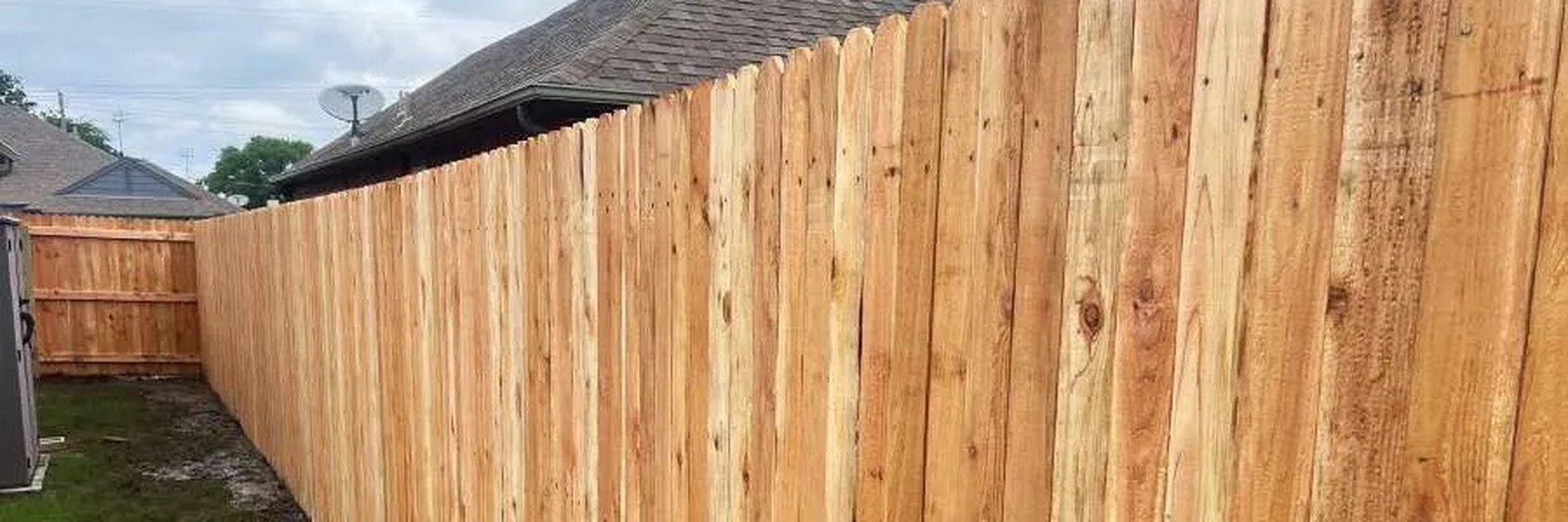
Elevation F-1 — six-foot wood privacy fence
Cedar or treated pine on posts set in concrete. Six-foot on an interior lot clears every Edinburg permit exemption — which is why most of the city has exactly this.
Treated pine costs less up front and takes stain well. Cedar carries natural oils that resist rot and insects without treatment, holds its shape better through the heat, and silvers to a soft gray if you leave it alone.
In this climate, the deciding factor is usually maintenance appetite. Pine wants a seal coat every couple of years to keep looking new. Cedar forgives neglect.
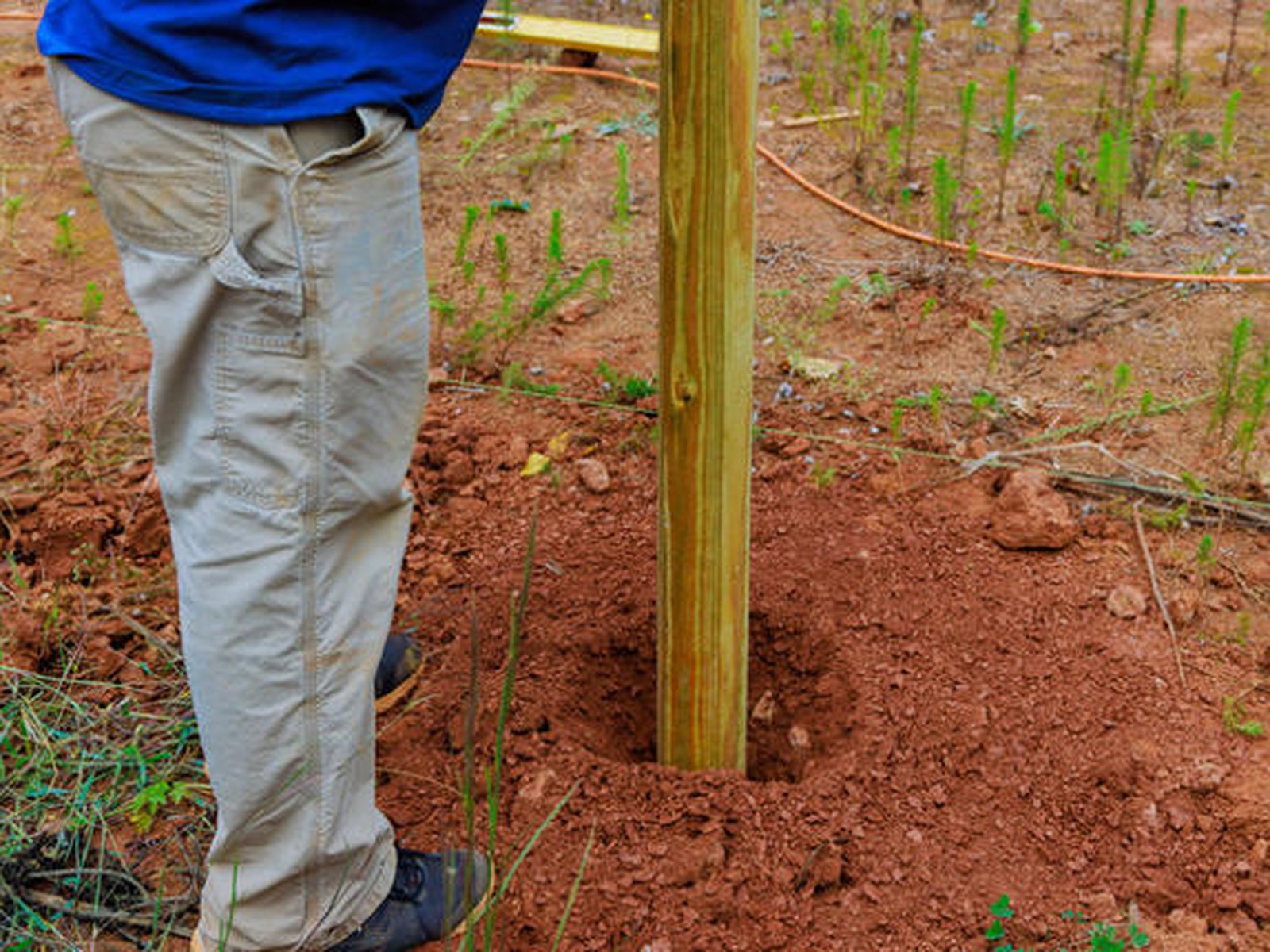
A fence fails at the posts. Everything above them is replaceable in an afternoon.
Roughly a third of the post belongs below grade, set in concrete crowned at the top so water sheds away from the wood instead of pooling against it. Skipping the crown is the single most common reason a five-year-old fence has a rotten post.
Gate posts get more — heavier post, deeper hole, more concrete — because a gate puts a lever on them every time it swings.
A horizontal cap across the picket tops stiffens the whole run, keeps rain off the end grain, and hides any variation in picket height. It costs more, and it is the detail that makes a wood fence read as built rather than assembled.
Gates in a wood line get a steel frame rather than wood-on-wood, so the gate keeps its square as the pickets age. A driveway-width wood gate is a driveway gate build, not a fence panel on hinges.
Cedar carries natural oils that resist rot and insects without chemical treatment, and it holds its shape better through repeated heat cycles. Treated pine costs less and performs well, but it wants a seal coat every couple of years. If you would rather not maintain it, cedar is the safer buy.
Finished side out. Edinburg prohibits fencing with structural supports visible to the public or from adjacent properties, so the posts and rails face into your yard and your neighbors and the street get the smooth face. This is a code requirement, not a courtesy.
On an interior lot, no. Wood is an exempt material, and six feet is under the seven-foot threshold. A corner lot, a street yard, or anything over seven feet changes that answer. See our Edinburg permit guide for the full rule.
Treated pine holds moisture from the treatment process and needs to dry before it will take stain — often several months. A quick test: sprinkle water on the boards. If it beads up, the wood is still too wet. If it soaks in, you can stain.
It depends almost entirely on the posts and on drainage. Pickets and rails are replaceable; posts properly set in crowned concrete determine whether you are repairing in year eight or year twenty. Gate posts fail first because a gate levers on them every time it swings.