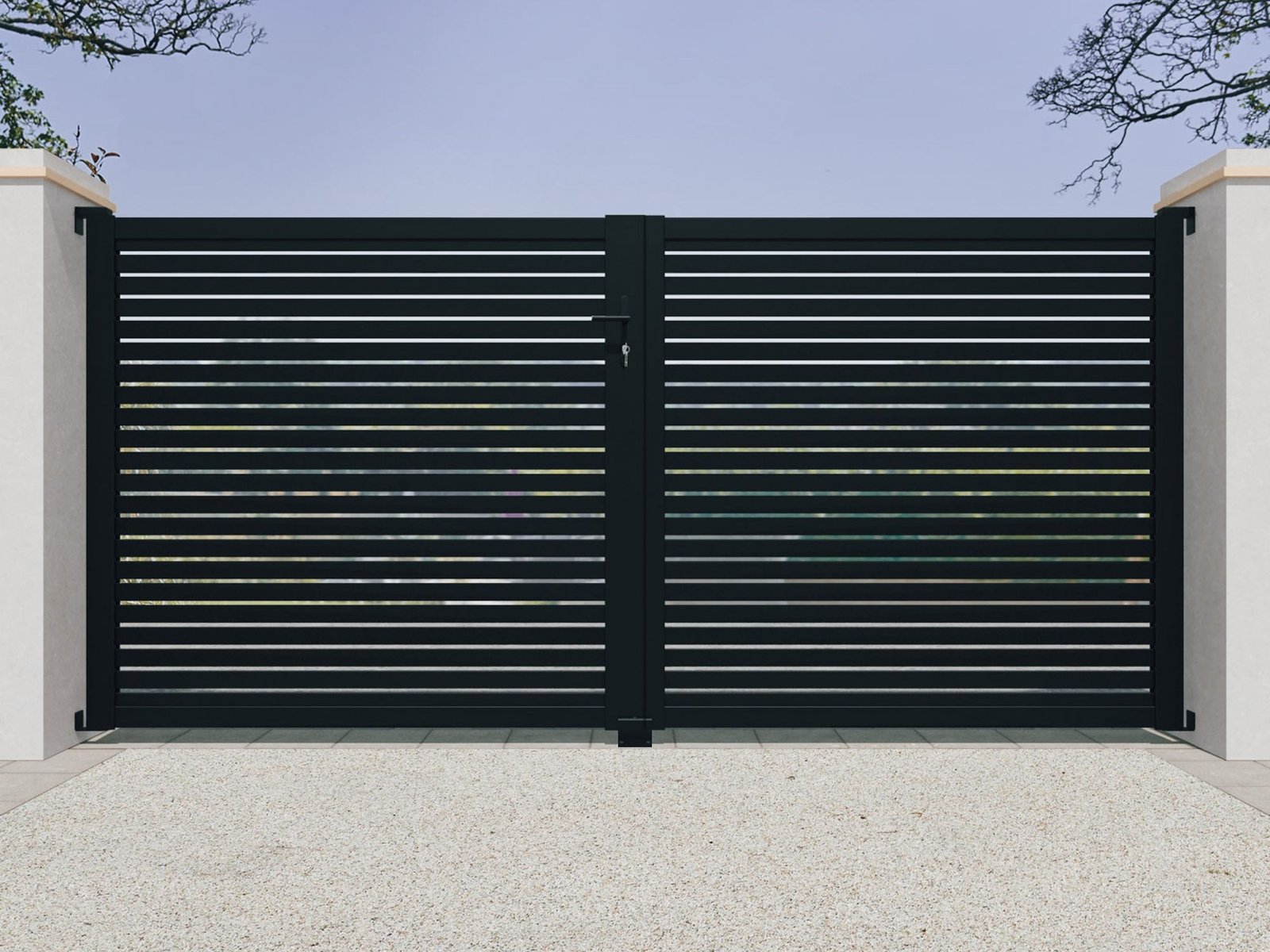
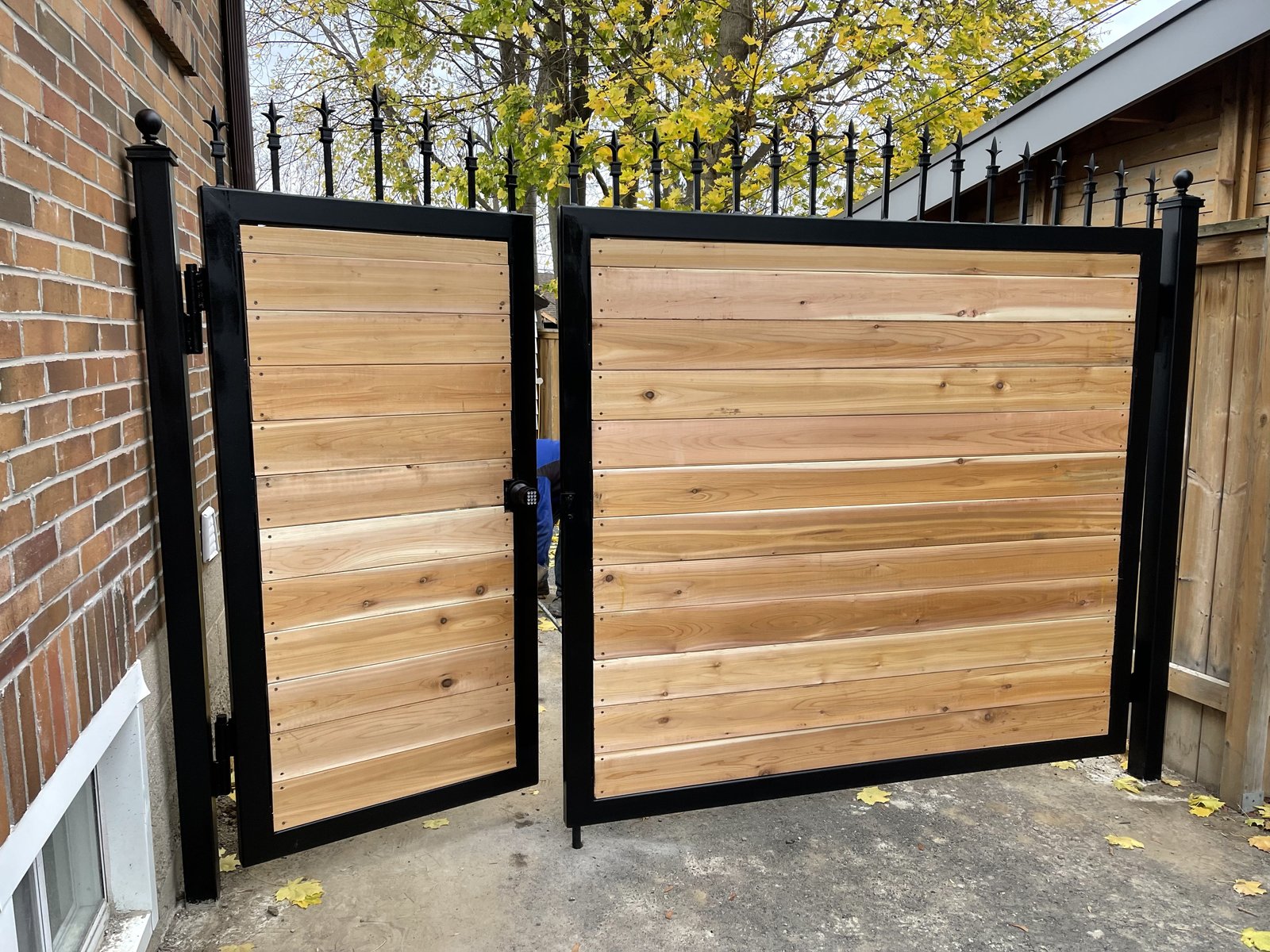
Plan G-1 — swing arc versus slide run-back
Swing or slide, iron picket or wood infill on a steel frame — with the operator planned in from the start rather than bolted on afterward.
A swing gate needs a clear inside arc and level ground where the leaf travels. A driveway that rises from the street will catch a swing leaf before it is halfway open.
A slide gate needs run-back room along the fence line and doesn't care about slope at the opening at all. Narrow lots and rising driveways end up sliding.
A double splits the span into two lighter leaves, which halves the load on each hinge and each operator. Past about twelve feet of opening, a double is usually the better build.
A rolling gate runs on a wheel track set in the driveway. It costs less, and the track fills with dirt and gravel — the most common reason a slide gate stops working here. A cantilever hangs from posts and clears the ground entirely, costs more, and needs more run-back.
Iron picket is the default: rigid for its span, light for its size, and powder-coated. Wood infill on a steel frame matches a wood fence line but adds weight and wind load. Solid sheet gives full privacy and catches more wind than anything else you can hang.
Weight is not cosmetic. It sets the operator size, hinge spec, post size, and footing depth. A gate specified by looks alone is the one that sags in year two.
A driveway gate sits in the street yard by definition, and any fence in a street yard or on a corner lot requires a permit in Edinburg regardless of material or height. Read the Permit guide before settling on a height.
A swing gate needs clear arc inside the property and level ground where the leaf travels; a driveway that rises from the street will catch it. A slide gate needs run-back room along the fence but ignores slope at the opening entirely. Narrow lots and rising driveways usually end up sliding.
Wide enough for the vehicles that actually use it, plus margin for turning in from the street at an angle. Think about deliveries, trailers, and emergency access, not just the family car. It is worth measuring the approach, not only the opening.
Yes, but plan for it now even if you do not buy it now. The conduit run, the exit loop, and the operator pad are cheap while the driveway is open and expensive once the concrete is down. Building the gate frame to the right rigidity for a motor also matters.
Yes. A driveway gate sits in the street yard by definition, and any fence in a street yard or on a corner lot requires a permit in Edinburg regardless of material or height. Settle the height question before design, not after.