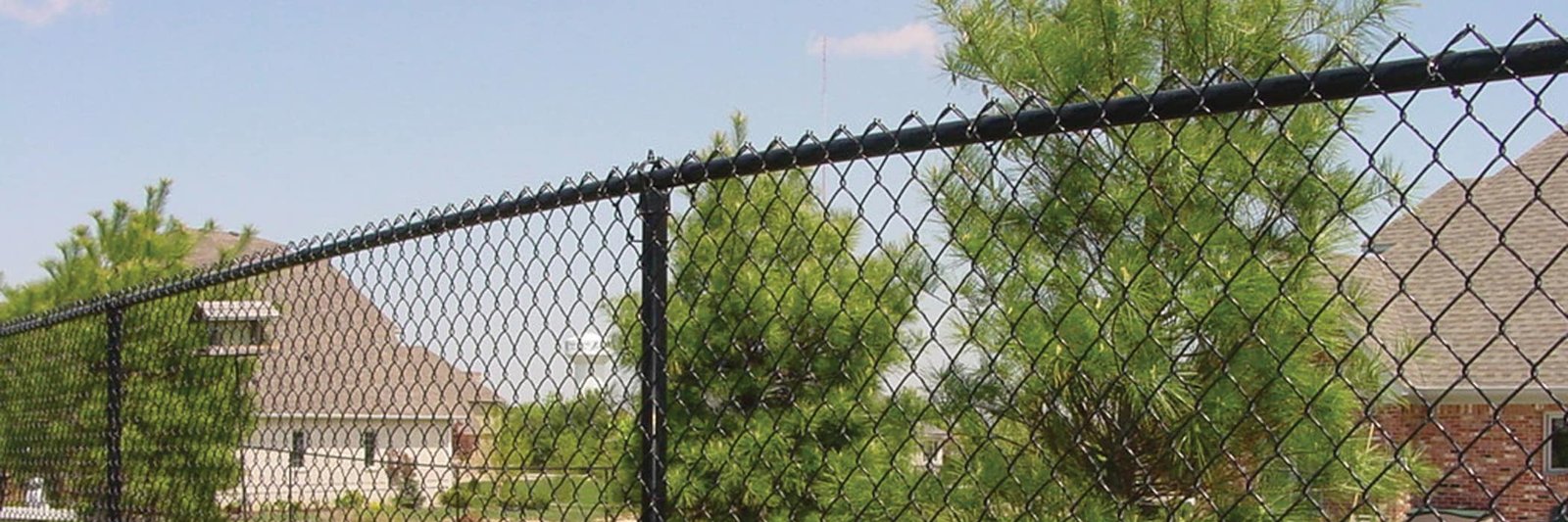
Elevation F-2 — chain link fence
Galvanized or black vinyl-coated, top rail and tension wire, 9 to 11.5 gauge mesh. The least expensive way to enclose a yard — and permit-exempt at standard heights.
Galvanized is the silver mesh everyone pictures: lowest cost per foot, lasts, and draws the eye.
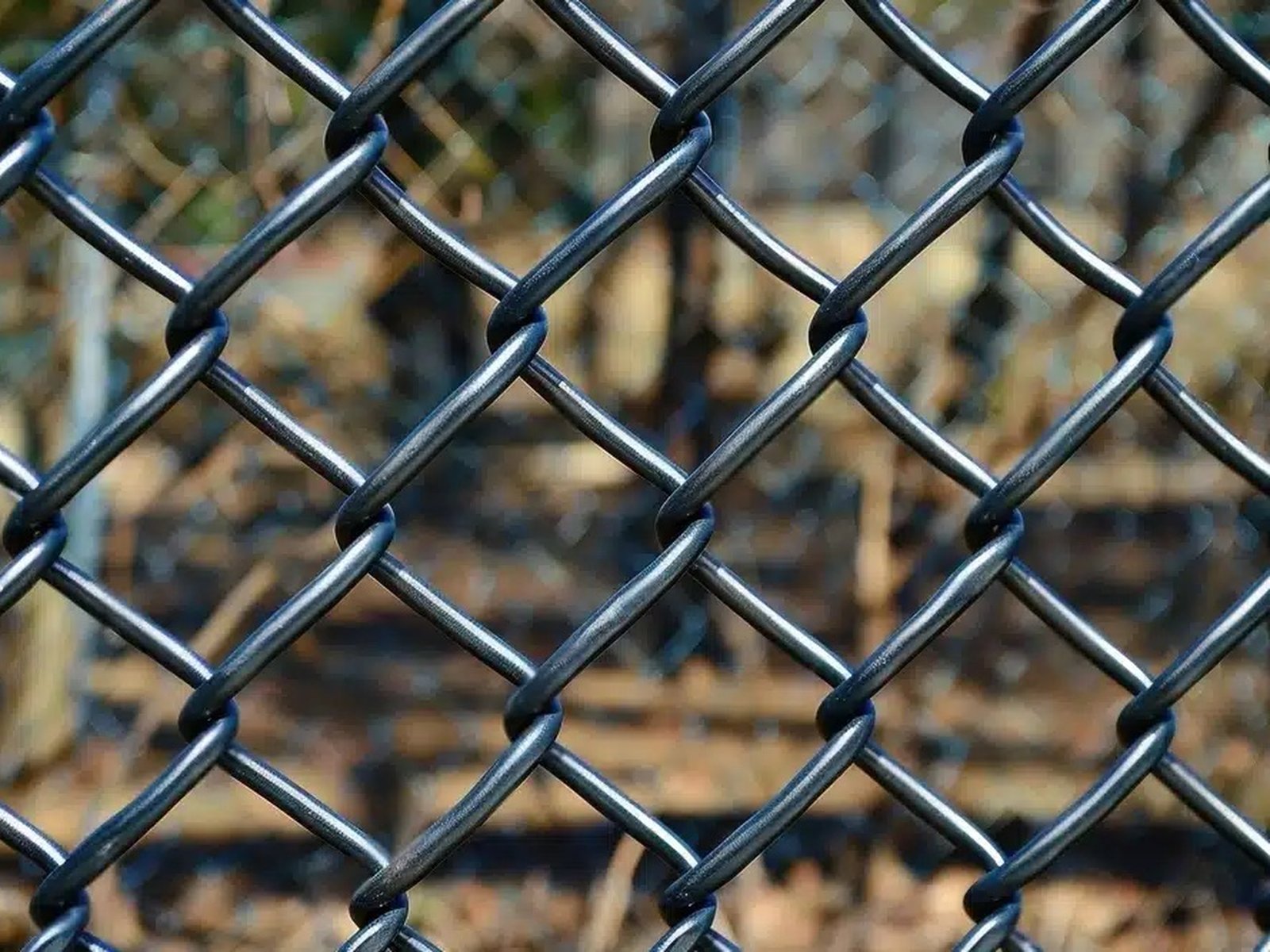
Black vinyl coating costs more and does the opposite — against grass and shrubs, the fence visually disappears, which is why it has largely replaced silver on residential work. The coating also adds a layer over the galvanizing.
Residential mesh runs 11 or 11.5 gauge. Nine gauge is heavier wire and noticeably stiffer — worth it for large dogs or anywhere the fence takes abuse. Smaller mesh openings cost more and are harder to climb.
Slats thread vertically through the mesh and take a fence from see-through to roughly 75–90 percent blocked. Cheaper than rebuilding in wood — but they catch wind, and posts and footings have to be sized for that load. What is already in the ground usually was not.
The city's exemption lists chain link alongside wood, wrought iron and square tubing. On an interior lot, under seven feet, no permit. On a corner lot or in a street yard, a permit regardless. Details in the Permit guide.
Black coated mesh costs more and visually disappears against grass and shrubs, where silver galvanized draws the eye. The coating also puts a layer over the galvanizing. If the fence sits anywhere you will look at daily, most owners prefer black once they see the two side by side.
Residential standard is 11 or 11.5 gauge. Nine gauge is heavier wire and noticeably stiffer, which is worth the upgrade for large or determined dogs. Adding tension wire along the bottom is the other half of that answer — it stops the mesh from being pushed up from underneath.
You can, but slats turn an open fence into something closer to a solid one, and that means wind load the posts were never sized for. If slats are a possibility down the road, say so at the estimate so the posts and footings are specified for it from the start.
Chain link is named among the exempt materials, alongside wood, wrought iron, and square tubing. On an interior lot under seven feet, no permit. On a corner lot or in a street yard, a permit is required regardless of material.